
5 Questions Families Should Ask When Exploring Disability Services
Key Takeaways
- Waitlists can run for years. Apply earlier than feels necessary.
- Staff turnover tells you more about a provider than any brochure will.
- Great providers center on the individual’s wants, not just the family’s vision.
- Planning for caregiver transitions is often left too late.
- How a provider handles a crisis reveals their true level of preparedness.
Navigating disability services for a loved one can feel overwhelming. Knowing which questions to ask helps you cut through the noise and find providers that are truly a good fit. Here are five that go beneath the surface.
1. How Long Is the Waitlist, and When Should We Apply?
This sounds like a logistics question, but it’s actually a wake-up call.
Waitlists for residential and day services vary widely, but the families with the most options tend to be the ones who started the conversation early. Reaching out before a situation feels urgent gives you time to ask good questions, tour programs, and find a genuine fit rather than a quick fix.
The earlier you connect with providers and disability resources, the more choices you’ll have when the time comes.
2. What Is Your Staff Turnover Rate?
Most families ask about activities and facility safety. Almost nobody asks how long the staff actually stays.
Care is delivered by specific people, not by programs. Someone who’s spent two years building trust with a support worker experiences a real loss when that person leaves. Understanding what direct support professionals bring to this work helps families know what to look for.
A provider who’ll give you their turnover rate honestly is worth your attention. Disability support services with lower turnover tend to offer staff better pay, real supervision, and meaningful career paths.
3. How Do You Find Out What Our Family Member Actually Wants (Separate From What We Want)?
When families have spent years advocating for a loved one, the individual’s preferences and the family’s vision can quietly blur together. Good providers consider that distinction on purpose.
Person-centered care starts with the person, not a family’s protective instincts. Ask for a real example of how the provider has navigated a situation where a family and the individual saw things differently.
Look for providers who create room for genuine growth. Programs that help individuals build confidence through new experiences reflect this mindset in action.
4. What Happens to Services if Something Happens to Us?
This is the question families postpone the longest.
Most planning centers on the person with a disability. Far less attention goes to what happens when their primary caregiver ages or becomes unavailable. By then, the people who know the individual best may be gone, and familiar routines can fall apart.
Disability advocacy organizations consistently emphasize building relationships with providers long before a transition becomes urgent. Ask whether the provider has experience supporting individuals through major caregiver changes. Families who’ve thought through how their loved one can build an independent life within their community are far better positioned when circumstances shift.
5. If There’s a Crisis, Who Do You Call First?
When a behavioral or mental health crisis occurs, someone makes a fast decision about how to respond. For many people with disabilities, a police response can be disorienting and escalating.
Ask the provider whether they have trained de-escalation staff, a relationship with a mobile crisis team, and a written crisis plan that first responders can access. It’s also worth asking how often staff actually rehearse or implement those plans in real situations, not just on paper.
Strong providers should be able to explain what typically happens minute-by-minute in a crisis, not just name policies. You’re looking for systems that reduce escalation early, before outside intervention becomes necessary.
The Right Disability Services Should Support the Whole Family
These five questions won’t cover everything, but they give families a strong foundation for evaluating disability services in a way that goes beyond brochures and promises.
The best providers are transparent, thoughtful, and curious about the person they’re supporting. They welcome hard questions, talk openly about their limitations, and treat the family as a partner, not a problem to manage.
Finding that kind of fit takes time, but it’s worth it. The right provider gives the whole family a little more room to breathe.
Explore organizations working to expand and improve disability services in your community to find the support your family deserves.
About Echoing Hills
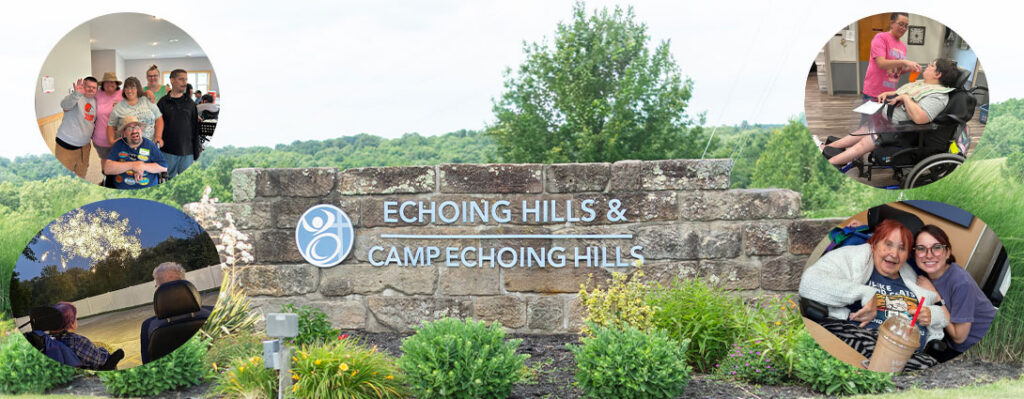
Since 1967, our mission has been to improve the lives of people who live, learn, connect, play, and worship. We provide premier residential, adult day, educational, and camp services for individuals with intellectual and developmental disabilities throughout Ohio.
Our values center on the right to choose, the dignity of each person, and personal fulfillment — the same things families are looking for when they ask the questions that matter most.
If you’re exploring residential services or adult day services for a loved one, we’d love to start the conversation. Contact us today!